

Finishing Your Basement in London, Ontario: Moisture, Permits, Insulation and Drywall
A finished basement is one of the best ways to add living space without adding on: a family room, an office, a guest room or a place for the kids to make noise. Winter is a popular time to plan one. The basements that turn out well, and stay that way, are the ones where a few things were sorted out before the first sheet of drywall went up.
1. Deal with moisture first
Water is the enemy of a finished basement. London gets plenty of snowmelt and spring rain, and anything you build over a damp wall will smell musty or grow mould. Before you plan anything, look for:
- Damp or dark patches on the concrete walls or floor, especially after rain.
- White, chalky powder (efflorescence) on the walls, a sign water is moving through the concrete.
- A musty smell that doesn't go away.
- Downspouts that empty right next to the house, or ground that slopes toward the foundation.
Often the fix is outside: extending downspouts, regrading soil away from the house and sealing cracks. Get that done, and watch the basement through a wet spell, before you finish the walls.
2. Check what needs a permit
In London, finishing a basement usually needs a building permit from the City, especially when you add walls, a bathroom or a bedroom. Electrical work such as new circuits and pot lights needs an Electrical Safety Authority (ESA) permit and a licensed electrical contractor, and the plumbing for a new bathroom is done by a licensed plumber. Check with the City of London's building division before you start. Permit drawings also spell out the insulation and fire-safety details, which takes the guesswork out of the rest.
3. Plan the layout around what has to stay reachable
- Keep access to the furnace, water heater, electrical panel, main water shut-off and any cleanouts. Build closets or panels with doors rather than walling them in.
- A bedroom needs a way out: a window big enough to climb through in an emergency, plus smoke and carbon monoxide alarms. Our smoke and CO alarm guide covers Ontario's rules.
- Headroom: ducts and beams often run low. Plan bulkheads around them early so the ceiling stays as high as possible everywhere else.
4. Insulation and framing
Basement walls lose a lot of heat, and the building code expects them to be insulated when the space is finished. The common approaches are rigid foam boards against the concrete, closed-cell spray foam, or a stud wall with insulation and a vapour barrier on the warm side. Spray foam insulates and seals in one step, which is why it's popular for basement walls. Wherever wood touches concrete, use pressure-treated lumber or a foam sill gasket so it can't soak up moisture.
5. Drywall, ceilings and floors
- Walls: regular drywall works for most rooms. Use moisture-resistant board in a bathroom and near the laundry.
- Ceiling: drywall gives a clean finished look. A drop ceiling keeps pipes, valves and wiring easy to reach. Many people use drywall and add access panels where the shut-offs are.
- Floors: vinyl plank handles basement conditions far better than hardwood or carpet straight on concrete. A subfloor system adds warmth underfoot.
- Finish: good taping and mudding makes or breaks the look. Basement light is low and comes from the side, which shows every seam, so take your time here or leave it to a pro.
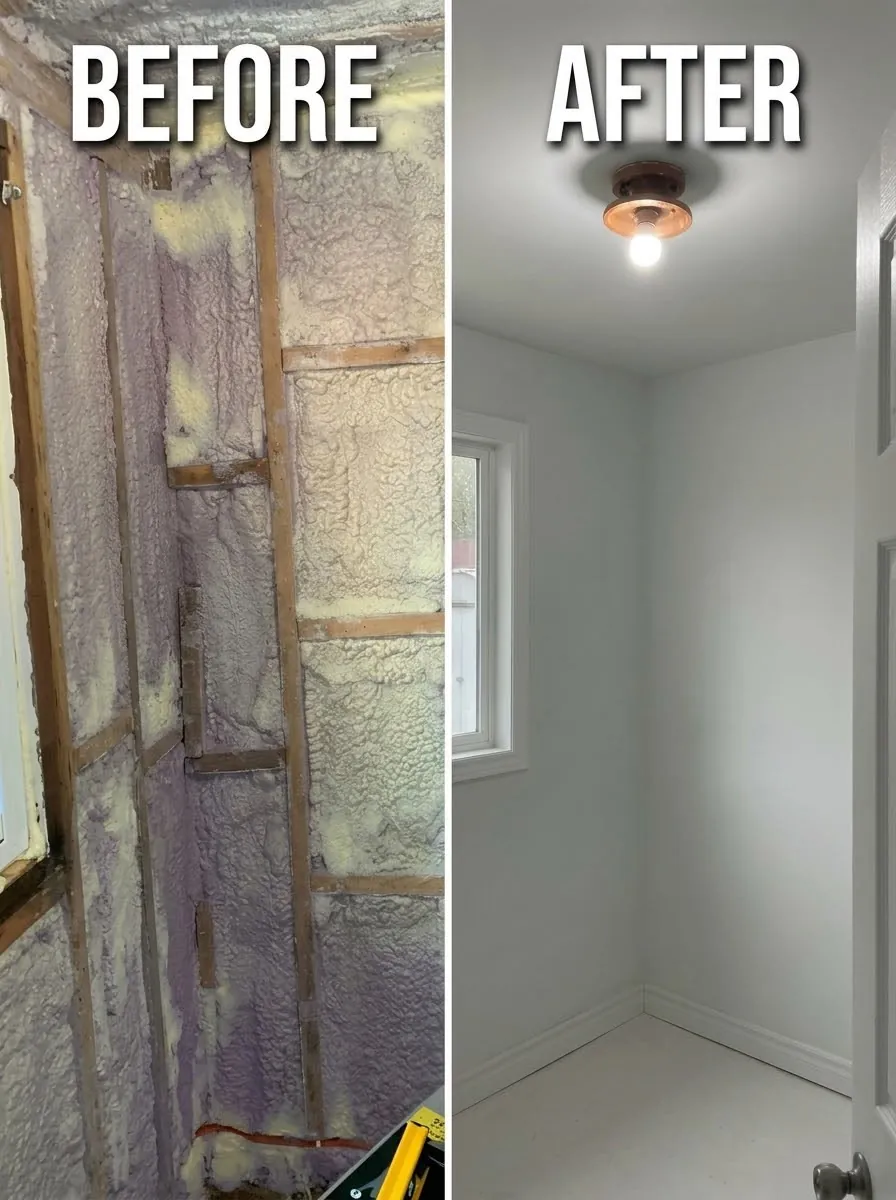
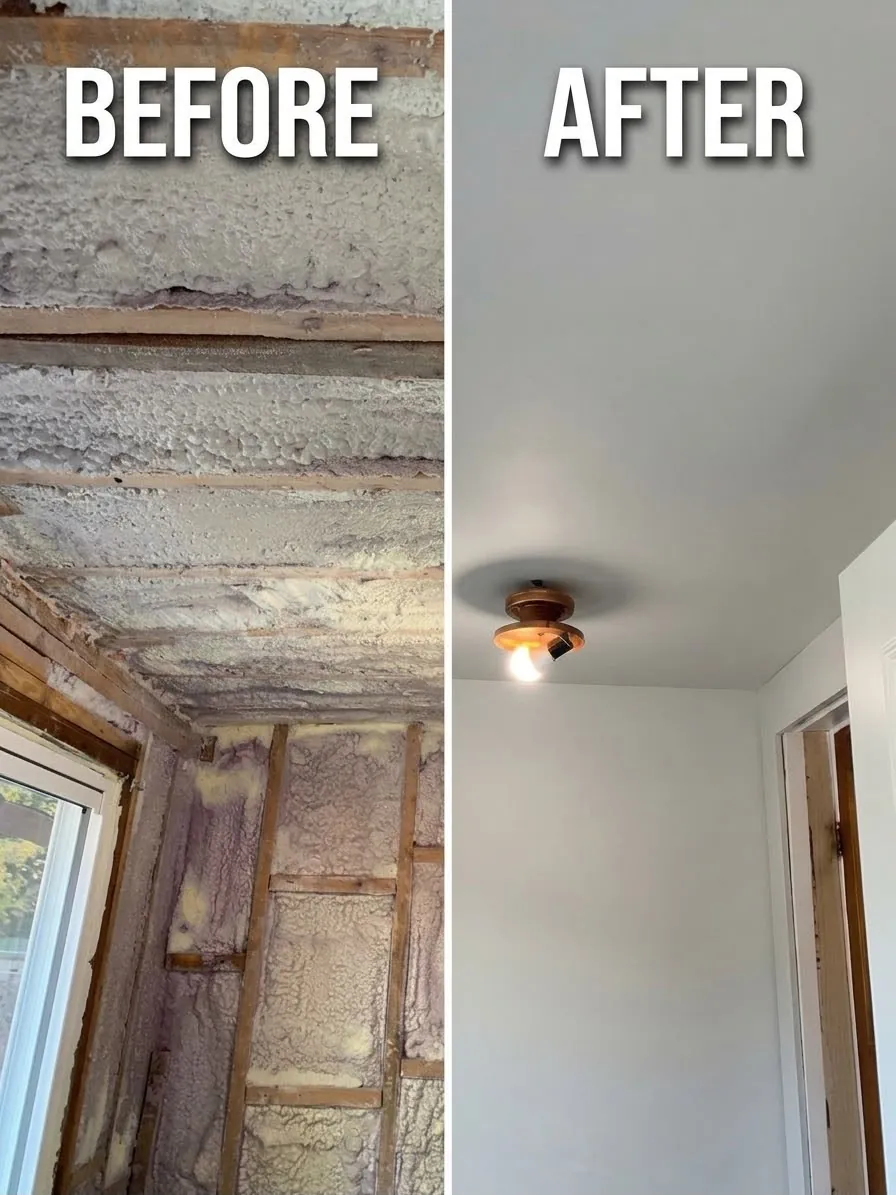
We recently finished a small room exactly like this: walls and ceiling that had just been spray-foamed, now drywalled, taped, trimmed and painted. You can see the before and after on our Projects page.
6. Light it well
Basements feel smaller and colder when they are dim. Plan more light than you think you need: pot lights on dimmers, a light-reflecting paint colour, and a satin or eggshell finish that is easy to wipe clean. Our guide to choosing a paint finish helps with the last part.
Let us handle it
ApexPlus handles framing, drywall, taping, trim and painting for basements and spare rooms across London, and works alongside licensed electricians and plumbers for the rest. See our painting and drywall services or book a free estimate.
Recent Posts

Related Articles
Continue reading more insights related to Renovation.