




Flat, Eggshell, Satin or Semi-Gloss? Choosing the Right Paint Finish for Each Room

Most people spend weeks choosing a paint colour and about ten seconds choosing the finish. But the finish, or sheen, decides how the wall looks in different light, how well it stands up to scrubbing and how easily it can be touched up later. Winter is a good time to paint inside, so here's how to choose.
The finishes, from dullest to shiniest
- Flat or matte: no shine at all. Hides bumps, patches and uneven walls best, but marks more easily and doesn't like being scrubbed.
- Eggshell: a soft, low sheen. The most common choice for living spaces: a little more washable than flat while still hiding small flaws.
- Satin: a gentle glow. Wipes clean well, so it suits busy rooms, but it shows patches and roller marks more.
- Semi-gloss: noticeably shiny and very durable. Stands up to moisture and frequent cleaning.
- Gloss: the hardest-wearing and shiniest, mostly used on doors, trim and cabinets. Every flaw underneath will show.
The rule of thumb: the more shine, the more washable the paint, and the more it shows what's underneath.
Which finish goes where
- Ceilings: flat. It hides imperfections and doesn't reflect glare from lights.
- Living rooms, dining rooms and bedrooms: eggshell, or a washable matte if your walls have patches or dents.
- Hallways, stairways and kids' rooms: satin or a scrubbable eggshell, since these walls get touched constantly.
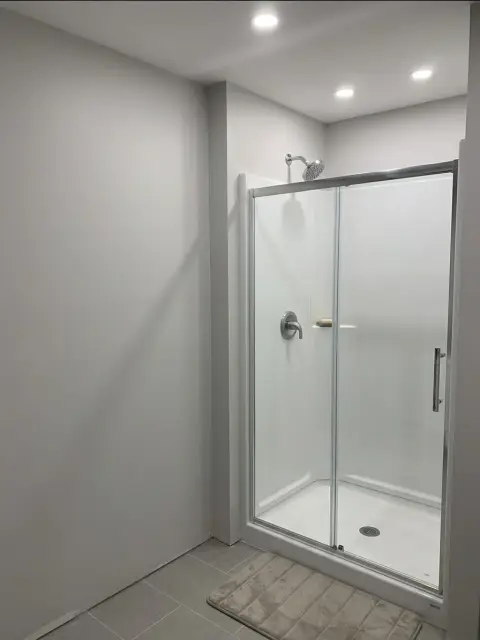
- Kitchens and bathrooms: satin or semi-gloss to handle steam, splashes and cleaning. Many brands make a bathroom paint with mildew resistance.
- Trim, doors and cabinets: semi-gloss or gloss, so they wipe clean and stand out from the walls.
Thinking about touch-ups
Higher-sheen paint is harder to touch up invisibly: a small patch often shows as a shinier or duller spot, especially when light hits the wall from the side. Flat and matte paints blend in best. Whatever you choose, keep a labelled can with the brand, colour name or code and the sheen, so future repairs match. This matters most in rentals, where walls get patched between every tenant.
Preparation makes the finish
A good finish starts before the paint can is opened. Fill nail holes and dents, sand the patches smooth and wipe away the dust. Water stains, smoke marks and marker need a stain-blocking primer, or they'll come straight back through the new paint. For crisp lines where the wall meets the ceiling or trim, there's a video on cutting in without tape on our Tips & Guides page.
Painting in winter
Interior painting works well in winter as long as the house stays heated. Check the can for the minimum temperature, open a window or run a fan for ventilation, and choose a low-odour, low-VOC paint if you'll be living in the space while it dries.
Leave it to us
ApexPlus patches, primes and paints rooms, ceilings and trim across London, with floors and furniture covered and everything cleaned up after. See our painting and drywall services or book a free estimate.
Recent Posts


Related Articles
Continue reading more insights related to Painting.